
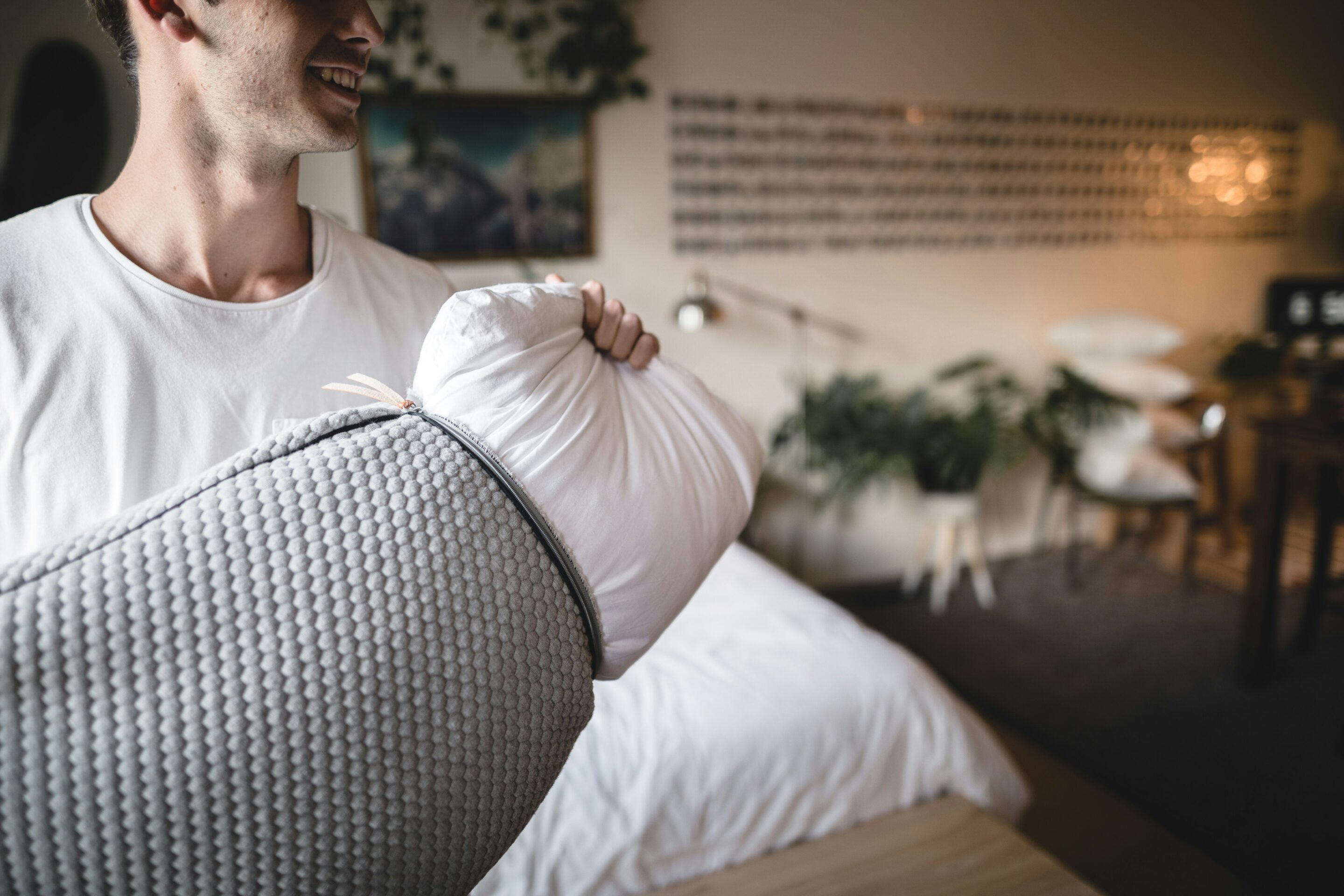
Maternity pillow filling is one of the main factors that affects comfort, shape retention, packaging volume, and customer satisfaction. For private label buyers, the filling choice should be reviewed together with pillow shape, cover fabric, zipper quality, compression packaging, carton size, and sample approval standards.
This guide is written for brand owners, Amazon sellers, retailers, distributors, and sourcing teams that are comparing maternity pillow suppliers for OEM or wholesale projects. It focuses on practical manufacturing and sourcing details rather than consumer-style pregnancy advice.
Table of Contents
- Why Filling Choice Matters
- Common Filling Options
- Filling Recovery and Shape Retention
- Support Zones and Pillow Structure
- Cover Fabric and Zipper Quality
- Compression Packaging and Bulk Shipping
- Quality Control Checklist
- Questions to Ask Suppliers
- FAQ
- Conclusion
- Related Reading
- Sources
Why Filling Choice Matters
Maternity pillow filling affects how the pillow feels when unpacked, how well it supports different body zones, and how it recovers after compression. A pillow that looks full in a product photo may still feel uneven if the filling distribution is not controlled during production.
For buyers comparing products in the maternity pillow product line, filling should be reviewed together with the final shape and target price point. U-shaped, C-shaped, wedge, and full-body pregnancy pillows may need different filling density, stitching structure, and packaging methods.
A good sample review should check both appearance and function. Buyers should evaluate softness, rebound, support zones, cover fit, zipper durability, odor, carton volume, and whether the bulk pillow can match the approved sample.
Common Filling Options
Common maternity pillow filling options include polyester fiberfill, microfiber filling, memory foam pieces, mixed foam filling, or other custom filling structures depending on the product design. Each option affects cost, weight, compression recovery, support feel, and shipping volume.
Polyester fiberfill is widely used because it can create a soft and adjustable feel. However, buyers should review filling weight, distribution, rebound, and long-term flattening risk. If the filling amount is reduced to control cost, the pillow may lose shape faster or feel less supportive.
For OEM buyers, filling should be defined in the product specification sheet. The specification should include filling type, filling weight, pillow dimensions, tolerance range, cover fabric, zipper type, packaging method, and carton information.
Filling Recovery and Shape Retention
Filling recovery is important because many maternity pillows are compressed for shipping. Buyers should test how the pillow looks and feels after unpacking, how long it takes to recover, and whether the filling becomes uneven after compression.
During sample approval, buyers should compare the pillow immediately after unpacking and again after a recovery period. This helps identify whether the filling volume, cover size, and compression method are suitable for the target sales channel.
If a brand plans to sell through Amazon, retail warehouses, or distributors, packaging volume can directly affect logistics cost. A lower-volume package may reduce shipping pressure, but it should not damage pillow shape or create a poor first impression after opening.
Support Zones and Pillow Structure
Maternity pillows often need different support zones for the head, neck, belly, back, knees, or legs depending on the design. The filling should be distributed consistently so the pillow does not feel too flat in one area and too bulky in another.
For a product such as a U shaped pregnancy body pillow, buyers should check whether the two sides feel balanced, whether the curve keeps its shape, and whether the pillow can be folded or packed without creating permanent deformation.
Stitching structure also matters. Inner seams, side seams, and panel shapes can help control filling movement. If the structure is too loose, filling may shift during use or after washing, which can affect customer reviews and return risk.
Cover Fabric and Zipper Quality
The cover fabric affects skin-contact comfort, washing performance, retail appearance, and perceived value. Buyers should review fabric composition, hand feel, shrinkage, colorfastness, pilling risk, print clarity, and whether the cover is removable and washable.
Zipper quality should not be treated as a minor detail. A weak zipper can create after-sales complaints even when the pillow filling is acceptable. Buyers should check zipper smoothness, slider strength, seam alignment, and whether the zipper is covered or positioned comfortably.
For private label projects, OEM/ODM customization may include custom cover fabric, printed patterns, woven labels, insert cards, carton marks, and private label packaging. These details should be confirmed before sample approval so the final pillow matches the brand’s launch plan.
Compression Packaging and Bulk Shipping
Compression packaging is common for maternity pillows because pillow volume can be high. Buyers should review whether the pillow is vacuum packed, rolled, folded, or packed in a reusable bag or retail carton.
The main packaging question is balance. Strong compression can reduce shipping volume, but it may also affect recovery, fabric wrinkles, zipper stress, and the customer’s first impression. Buyers should test the packaging method before approving bulk production.
Carton information should be confirmed before the order is placed. Buyers should request carton size, pieces per carton, gross weight, net weight, packing method, barcode placement, and any retail or warehouse labeling requirements.
Quality Control Checklist
| QC Point | What Buyers Should Check | Why It Matters |
|---|---|---|
| Filling weight | Actual filling amount, tolerance, distribution | Controls support feel and consistency |
| Recovery | Shape after compression, rebound time, uneven areas | Reduces unpacking complaints |
| Support zones | Head, back, belly, knee, and leg support balance | Improves product function and customer satisfaction |
| Cover fabric | Composition, softness, shrinkage, pilling, colorfastness | Affects comfort and washing performance |
| Zipper | Smoothness, stitching, slider strength, position | Reduces after-sales defects |
| Packaging | Compression method, carton size, barcode, insert card | Supports shipping, warehousing, and retail handling |
Questions to Ask Suppliers
- Which filling type is recommended for the target pillow shape and price point?
- What filling weight and tolerance will be used for bulk production?
- How does the factory check filling distribution and shape consistency?
- How long should the pillow recover after compression packaging?
- Can the cover fabric be customized by color, print, texture, or composition?
- What zipper type and zipper position are used in the approved sample?
- Can the supplier provide packaging dimensions, carton details, and private label packaging support?
- Which textile documents, material information, or care label details are available for review?
FAQ
What is the most important filling factor for maternity pillows?
Filling recovery and distribution are usually the most important review points. Buyers should check whether the pillow keeps its shape after compression and whether support zones feel balanced across the full pillow.
Should buyers approve a compressed sample?
Yes. If the bulk order will be shipped compressed, buyers should review the sample after the same packaging method. This helps confirm recovery, fabric appearance, zipper stress, and customer unboxing quality.
Can maternity pillow covers be customized?
Many OEM projects can support custom cover fabric, colors, prints, labels, and packaging. Buyers should confirm MOQ, fabric availability, color tolerance, sample time, and care label requirements before development.
Why does carton size matter for maternity pillows?
Maternity pillows can take up significant shipping and storage volume. Carton size affects freight cost, warehouse handling, retail receiving, and Amazon or distributor planning.
What should be included in a maternity pillow specification sheet?
A useful specification sheet should include pillow shape, dimensions, filling type, filling weight, cover fabric, zipper details, label information, packaging method, carton size, and quality tolerance.
Conclusion
Maternity pillow filling should be reviewed as part of the full product system. Filling recovery, support zones, cover fabric, zipper quality, compression packaging, carton planning, and documentation all affect whether the final product is ready for private label sales.
For buyers working with a maternity pillow manufacturer, the safest approach is to define specifications early, test compressed samples, review packaging details, and confirm how the supplier will control filling consistency during bulk production.
Related Reading
- Babynice Maternity Pillow Products
- U Shaped Pregnancy Body Pillow
- Babynice OEM/ODM Customization Process
- Babynice Baby Products Manufacturer


